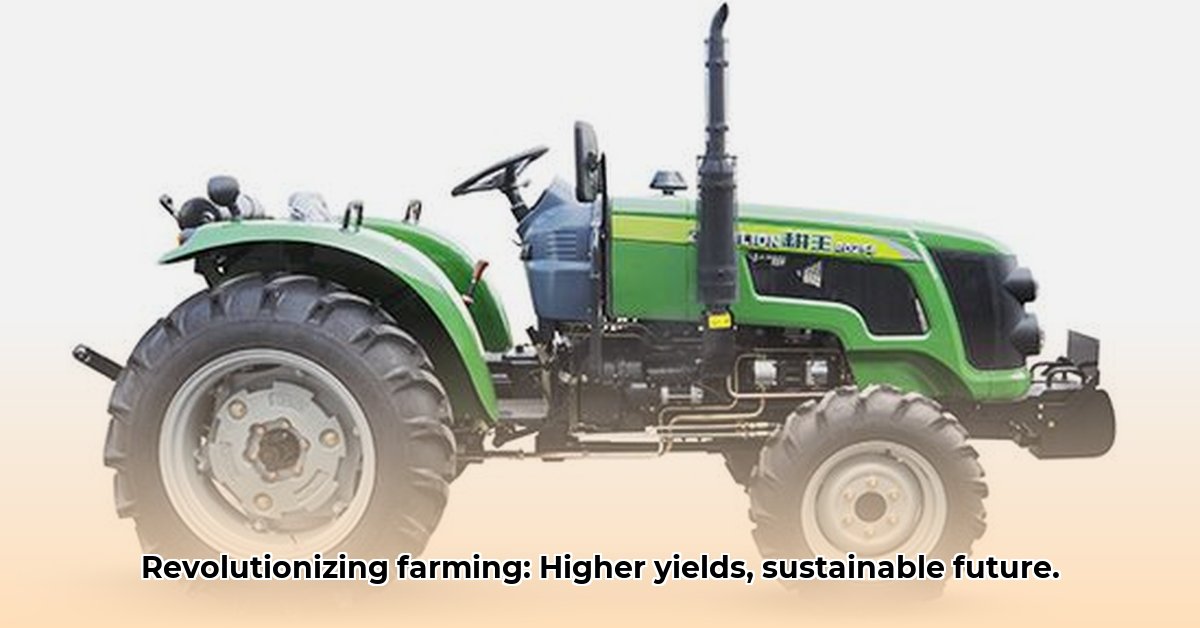
Farming is undergoing a technological transformation, driven by the urgent need for sustainable practices. Climate change, volatile fuel prices, and increasing demand for food are pushing farmers to adopt innovative solutions. Enter the farmer truck tractor – a powerful symbol of this shift towards a greener, more efficient agriculture. This isn't just about bigger machines; it's about leveraging technology to boost yields while minimizing environmental impact. For more information on tractor models, check out the Mahindra Tractor Models.
Fuel Efficiency: A Greener Bottom Line
Fuel costs are a major expense for farmers. However, modern farmer truck tractors are engineered for exceptional fuel efficiency. Every gallon saved translates directly into increased profit margins and a reduced carbon footprint. Dr. Anya Sharma, Agricultural Engineer at the University of California, Davis, notes, "The advancements in engine technology and aerodynamics are remarkable. We're seeing fuel savings of up to 25% compared to older models, a significant boost to farm profitability and environmental sustainability." This isn't just about cost savings; it's about economic resilience and environmental responsibility intertwined. Do you want to know how much your farm could save annually with a fuel-efficient tractor?
Reduced Emissions: Farming's Role in Climate Action
Reducing greenhouse gas emissions is paramount. Farmer truck tractors are leading the charge with hybrid models and alternative fuel options emerging rapidly. Biodiesel and hydrogen fuel are promising avenues, significantly lowering emissions compared to traditional diesel. This shift toward cleaner technology is crucial for mitigating climate change and improving air quality in rural communities. Professor David Miller, from Cornell University's Department of Soil and Crop Sciences, emphasizes the importance of this transition: "The agricultural sector has a significant role to play in climate action and the adoption of cleaner farming machinery is pivotal in achieving our emissions reduction goals." Are you considering the long-term environmental impact of your farming practices?
Precision Farming: Maximizing Output, Minimizing Waste
Modern farmer truck tractors, integrated with GPS, sensors, and sophisticated software, enable precision agriculture. This involves precise seed placement, targeted fertilizer application, and optimized harvesting. The result? Less waste, higher yields, and a smaller environmental footprint. This approach minimizes fertilizer runoff into waterways and conserves water resources, leading to healthier soil and more robust crops. John Miller, a farmer from Iowa, testifies, "Since switching to precision farming techniques, my fertilizer use has dropped by 15%, and my yields have actually increased. It's a sustainable and profitable approach." How can precision technology optimize your farm's resource management?
Technology's Role: Bridging the Adoption Gap
Despite the benefits, adoption of these advanced technologies faces challenges. The high initial investment cost, particularly for smaller farms, poses a significant barrier. Limited access to training and technical support also hinders widespread adoption. Overcoming these challenges requires collaborative efforts—government support through subsidies and low-interest loans, industry-led training programs, and farmer-to-farmer knowledge sharing initiatives. This collective approach is crucial to democratizing access to this transformative technology.
The Future of Farming: Automation and Beyond
The future of farming is bright, with autonomous tractors poised to revolutionize the industry. Imagine driverless tractors working around the clock, further boosting efficiency and reducing labor costs. Continued innovation in fuel technology promises even cleaner operations and greater fuel economy. The integration of AI and machine learning will lead to even more precise farming practices, optimizing resource allocation and minimizing waste. This technological evolution represents a significant leap forward in sustainable agriculture.
Challenges and Opportunities: A Balanced Perspective
While the promise is compelling, several obstacles remain, including:
| Challenge | Opportunity |
|---|---|
| High initial investment costs | Government subsidies, low-interest loans, leasing programs |
| Lack of access to technology | Educational programs, hands-on training, technical support networks |
| Limited long-term data | Ongoing research, data sharing initiatives, collaborative studies |
| Repair and Maintenance | Development of durable, easily repairable equipment, readily available parts & support |
How to Reduce Environmental Impact of Precision Agriculture Technology
Key Takeaways:
- Precision agriculture dramatically reduces resource use (water, fertilizer, fuel).
- Technological advancements offer significant environmental benefits, boosting farm profitability.
- Challenges remain in cost, infrastructure, and technology refinement.
- Government support, industry innovation, and farmer adoption are crucial for widespread success.
Precision agriculture is about maximizing efficiency and minimizing environmental impact. By adopting these strategies, farmers can contribute significantly to a sustainable future for agriculture:
- Optimize Irrigation: Implement precision irrigation systems to deliver water only where and when needed.
- Targeted Fertilizer Application: Use variable-rate technology to match fertilizer application to soil needs.
- Strategic Pesticide Use: Employ precision spraying systems for targeted pesticide application.
- Fuel-Efficient Machinery: Invest in fuel-efficient tractors with advanced engine technologies.
- Data-Driven Decision Making: Analyze farm data to identify patterns and optimize practices.
- Sustainable Practices Combined: Integrate precision agriculture with other sustainable farming methods.
The transition to sustainable farming requires a collective effort. Farmer truck tractors are a key element in this evolution, promising a future where we can feed the world while protecting our planet. The journey is ongoing, but the potential is immense.